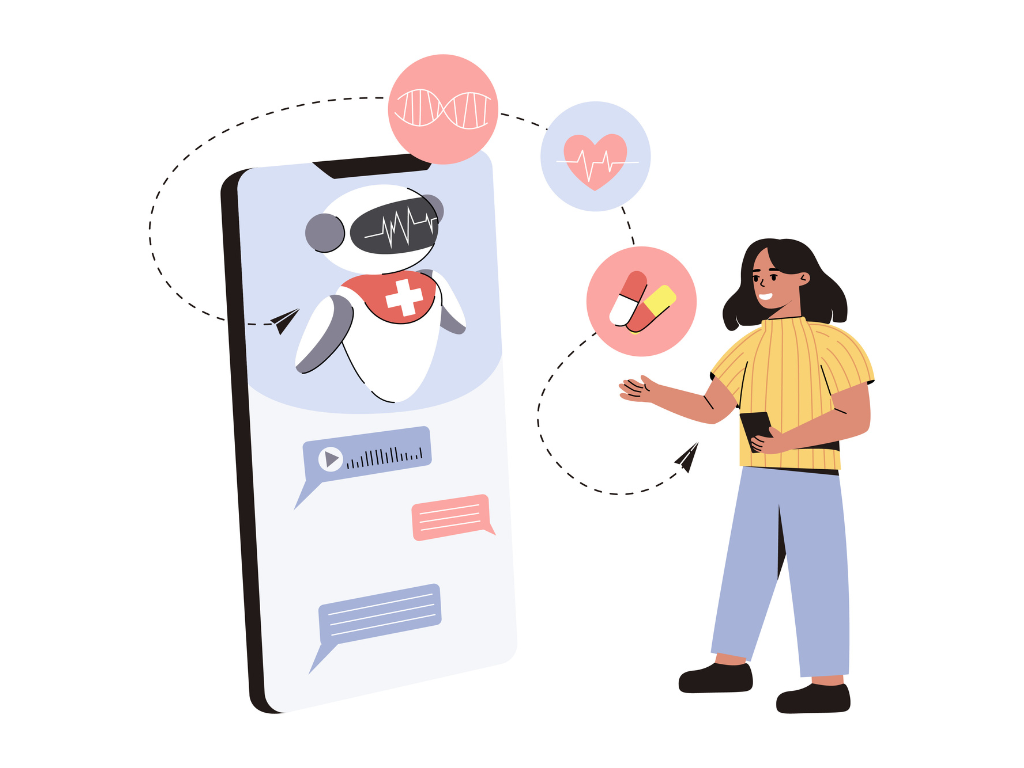
AI Healthcare Chatbot Development: A Complete 2026 Guide
"What if your next doctor's assistant could diagnose, schedule, and follow up — all without taking a coffee break?"
That's the promise of the AI healthcare chatbot — the tireless, data-driven virtual assistant transforming the healthcare landscape. In an era where every second counts, these chatbots are helping hospitals, clinics, and telemedicine platforms deliver instant, personalized, and accurate support to patients.
From scheduling appointments and analyzing symptoms to sending medication reminders right on time, chatbots in healthcare bridge the gap between human expertise and real-time digital care. They don't replace medical professionals; they amplify their impact — offering continuous engagement, reducing wait times, and ensuring no patient query goes unanswered.
By 2026, the AI chatbot for healthcare will be as essential as stethoscopes in hospitals — enabling smoother operations, proactive patient management, and HIPAA-compliant communication at scale. In short, chatbots and healthcare are no longer a futuristic combination; they're the foundation of the next era of patient-centered innovation.
Why Healthcare Needs AI Chatbots in 2026?
Healthcare today isn't just about curing illnesses—it's about delivering experiences that are fast, reliable, and deeply personalized. Patients expect the same immediacy from their healthcare providers that they get from streaming a movie or ordering food. That's where the AI healthcare chatbot steps in as a 24/7 assistant who never puts anyone on hold.
Here's why the use of chatbots in healthcare is skyrocketing in 2026:
- Round-the-clock patient support: Chatbots offer instant answers to health queries, appointment confirmations, or prescription reminders, regardless of time zones or clinic hours.
- Reduced administrative overload: Reception desks can finally breathe. AI bots handle appointment bookings, patient registrations, and insurance inquiries with zero errors.
- Enhanced patient engagement: Continuous interaction fosters stronger relationships and better treatment adherence. Patients feel heard—even when doctors are busy.
- Operational cost optimization: Clinics save on labor costs without compromising service quality. Efficiency soars while expenses shrink.
- Compliance and data accuracy: Chatbots follow strict frameworks like HIPAA, ensuring medical data remains secure while automating compliance tasks.
In short, the AI chatbot healthcare ecosystem isn't a futuristic dream—it's the logical next step in making healthcare more human through intelligent automation. Hospitals, startups, and healthcare SaaS providers now leverage AI chatbots in healthcare to deliver compassionate, data-driven experiences that scale effortlessly.
Transform Conversations into Conversions
Ready to create an AI chatbot that understands your patients better than ever? Let NovusVista design a healthcare chatbot that delivers engagement, automation, and measurable ROI.
Get Your Free AI Chatbot ConsultationKey Use Cases of Chatbots in Healthcare
If hospitals had superheroes, AI chatbots would be their sidekicks—handling the repetitive, data-heavy, and time-consuming tasks while humans focus on what truly matters: care. The applications of chatbots in healthcare today go far beyond answering FAQs; they're shaping smarter, faster, and more empathetic patient journeys.
Here are the top chatbot use cases in healthcare driving real impact:
1. Patient Onboarding & Appointment Scheduling
New patients can register, fill out digital forms, and book appointments—all guided by a chatbot. No waiting lines, no missed entries.
2. Symptom Checking & Triage Assistance
Using AI chatbots for healthcare, users can describe their symptoms in natural language and receive instant preliminary insights or recommendations to visit specialists.
3. Medication Reminders & Follow-ups
Chatbots nudge patients about dosages, refills, and post-treatment feedback, improving medication adherence rates.
4. Insurance & Billing Assistance
Say goodbye to paperwork chaos. Chatbots simplify claims, estimate insurance coverage, and explain policy details in plain English.
5. Mental Health Support Bots
From stress check-ins to mindfulness exercises, chatbots are becoming non-judgmental companions offering emotional support around the clock.
6. Doctor–Patient Communication
Between consultations, chatbots bridge the gap by updating patients on lab results, follow-up schedules, or care instructions.
To visualize their edge, here's a quick comparison:
| Feature | Traditional Support System | AI Chatbots for Healthcare |
|---|---|---|
| Availability | 8–10 working hours | 24/7 real-time response |
| Response Time | Minutes to hours | Instant (under 3 seconds) |
| Accuracy | Human-dependent | Data-driven & consistent |
| Cost per Interaction | High (manual labor) | Low (automated system) |
| Personalization | Limited | Adaptive via NLP Services & machine learning |
These healthcare AI chatbot systems are transforming how patients access care—replacing phone queues with meaningful conversations and automating what used to require entire support teams. The result? Faster, smarter, more humane healthcare delivery.
Also Read: Top 10 Conversational AI Chatbot Companies
Types of Chatbots in Healthcare
Not all chatbots wear the same white coat. Depending on their intelligence level and functionality, types of chatbots in healthcare can range from basic FAQ responders to AI-driven systems capable of analyzing symptoms, predicting health risks, and supporting doctors with insights. Let's break them down.
1. Rule-Based Chatbots
Think of these as the old-school practitioners of the chatbot world. They follow predefined scripts and decision trees—great for answering repetitive queries like "What are your visiting hours?" or "How can I book an appointment?" These bots are simple, affordable, and reliable for handling structured workflows such as appointment confirmations or insurance FAQs.
2. AI-Powered Chatbots
Now we're talking intelligence. These AI healthcare chatbots leverage natural language processing (NLP), contextual learning, and predictive analytics to hold dynamic conversations. They understand user intent, adapt responses, and can even detect urgency or emotion in patient messages. Perfect for symptom checking, triage, and post-care monitoring.
3. Hybrid Chatbots
The best of both worlds — these combine rule-based flows with AI capabilities. When automation hits a wall, they seamlessly transfer conversations to human agents. This ensures patients always receive accurate responses without feeling lost in an endless chatbot loop.
4. Voice-Enabled Chatbots
Voice is quickly becoming healthcare's favorite interface. These bots integrate with smart assistants and mobile devices, allowing patients to speak naturally — "Hey, when's my next check-up?" Voice-powered bots also enhance accessibility for visually impaired or elderly patients, making care more inclusive.
5. Predictive AI Chatbots
These advanced bots don't just react — they predict. Using Predictive Analytics Services, they analyze patient behavior, health records, and real-time data to forecast potential risks or suggest preventive actions. Hospitals use them for early intervention, chronic disease management, and personalized wellness programs.
In essence, AI chatbots in healthcare aren't just digital tools — they're becoming virtual care coordinators. Whether it's integrating with Enterprise Solutions Development or enhancing Enterprise Mobility Solutions in hospitals, they're redefining what "patient-first" truly means in the digital era.
Build Your Custom Chatbot Today
From concept to compliance — we handle it all. Partner with NovusVista to develop custom healthcare chatbot solutions tailored to your hospital, clinic, or telemedicine platform.
Start Your Project NowMust-Have Features of an AI Healthcare Chatbot
Building a healthcare chatbot isn't about stuffing a bot with generic scripts — it's about designing a digital care partner that's compliant, contextual, and clinically helpful. Whether you're developing for hospitals, clinics, or telehealth startups, these are the must-have features that make an AI healthcare chatbot truly effective.
a) Core Features – The Non-Negotiables
These are the foundation of any AI chatbot healthcare system — ensuring functionality, security, and seamless user experience.
- Multilingual Support: Healthcare is global. Your chatbot should converse fluently in multiple languages to ensure inclusivity and accessibility.
- Appointment Scheduling: Allow patients to book, reschedule, and cancel appointments directly through chat — integrated with calendars and hospital systems.
- Patient Data Encryption: Security isn't optional. Encrypted databases ensure compliance with HIPAA and local privacy regulations.
- HIPAA-Compliant Framework: Essential for maintaining confidentiality of patient data, treatment plans, and reports.
- Contextual Understanding: Using NLP Services, the chatbot can interpret complex medical terms and patient intents for meaningful interactions.
- Feedback & Escalation System: If the chatbot can't solve a problem, it must instantly route users to human support — no dead ends.
b) Advanced Features – Where AI Meets Innovation
These are what transform a simple bot into a virtual healthcare assistant capable of learning, adapting, and predicting.
- Predictive Health Insights: Integrated Predictive Analytics Services use patient data to identify risks or recommend preventive measures.
- Integration with Enterprise Solutions Development: Syncs chatbot workflows with EMR/EHR systems, billing tools, and healthcare CRMs.
- Voice AI & Sentiment Analysis: Detects tone, stress, or discomfort in patient voice/text — adjusting responses accordingly.
- Computer Vision Services: Enables photo-based consultations, like analyzing rashes or wounds from images securely shared by patients.
- AI-Driven Analytics Dashboard: Tracks conversation trends, query volume, and satisfaction scores for hospital management.
- Enterprise Mobility Solutions Integration: Brings chatbot support to hospital mobile apps for doctors, nurses, and patients on the go.
Incorporating these features ensures your healthcare AI chatbot doesn't just automate — it empathizes, predicts, and improves care delivery. By blending intelligence with compliance, hospitals can provide consistent, personalized, and secure patient engagement at scale.
Also Read: Top 10 Chatbot Development Companies
AI Healthcare Chatbot Development Process
The development of an AI healthcare chatbot involves precision, empathy, and adherence to strict compliance standards. Below is a detailed, step-by-step breakdown of how a robust and compliant chatbot is built for the healthcare ecosystem.
Step 1: Requirement Analysis & Compliance Check
The process begins by identifying key objectives — whether the chatbot will handle appointment scheduling, symptom triage, or post-care engagement. During this stage, HIPAA, GDPR, and regional privacy frameworks are reviewed to ensure every design decision supports data confidentiality. Enterprise architecture services help define the foundation for scalability and data flow compliance.
Step 2: Use Case Identification
Each healthcare institution has unique requirements. This step focuses on pinpointing the most valuable use cases — such as patient onboarding, insurance verification, or mental health assistance. Teams analyze patient journeys to define conversation triggers, data requirements, and escalation paths.
Step 3: Designing Chat Flow & UX
Once the goals are set, conversational architects and UX designers map out natural and intuitive chat flows. The objective is to create a dialogue that feels human while maintaining medical accuracy. Visual mockups, tone guides, and clinical validation steps are all part of this design phase.
Step 4: Model Selection (NLP/LLM)
This stage determines the "intelligence" of your chatbot. Developers select and fine-tune models using LLM company frameworks, ensuring the bot can interpret medical terminology, detect user intent, and manage multi-turn conversations. For multilingual or emotion-sensitive chatbots, domain-specific fine-tuning is performed for better accuracy.
Step 5: Integration with EMR & APIs
The chatbot connects with hospital EMRs, billing software, and third-party applications through secure APIs. This phase leverages Enterprise Solutions Development expertise to synchronize data in real time. Proper encryption layers and authentication protocols are configured to keep patient information protected throughout the exchange.
Step 6: Testing, Validation & QA
Before any live deployment, the chatbot undergoes a series of tests covering functionality, usability, performance, and compliance. The QA team validates data accuracy, medical response correctness, and encryption standards. Edge cases such as incomplete user input or emergency keywords are stress-tested for reliability.
Step 7: Deployment & Continuous Monitoring
Once cleared, the chatbot is deployed across desired platforms — web portals, hospital apps, or WhatsApp-based care systems. Continuous monitoring begins immediately to track response times, engagement metrics, and error rates. Logs are reviewed for anomalies or compliance gaps.
Step 8: Post-Launch Support & Upgrades
After deployment, maintenance becomes an ongoing responsibility. With dedicated software maintenance and support services, developers provide updates for performance optimization, security patches, and integration with new healthcare systems. As medical protocols evolve, chatbot content libraries are also refreshed to maintain relevance.
This structured process ensures the AI chatbot for healthcare evolves as an intelligent, compliant, and scalable digital assistant capable of delivering accurate care experiences across the patient journey.
Smart Chatbots. Smarter Healthcare.
Empower your organization with an AI chatbot that scales effortlessly across departments and patient touchpoints. Experience innovation with the leading AI Development Company.
Book a Strategy CallCost of AI Healthcare Chatbot Development in 2026
When it comes to building an AI healthcare chatbot, the cost varies depending on complexity, integrations, and intelligence level. Whether you're developing a simple scheduling assistant or a fully AI-powered conversational agent with EMR integrations, understanding the cost breakdown helps in planning your budget effectively.
The table below outlines estimated chatbot development costs for 2026:
| Complexity Level | Estimated Cost (USD) | Development Duration | Use Case Examples |
|---|---|---|---|
| Basic Chatbot | $15,000 – $25,000 | 4–6 weeks | Appointment scheduling, FAQs, reminders |
| Mid-Level Chatbot | $25,000 – $50,000 | 8–12 weeks | Symptom checking, insurance support, EMR sync |
| Advanced AI Chatbot | $60,000 – $100,000+ | 12–20 weeks | Predictive care, NLP, voice & image recognition |
Key Cost Factors
- Feature Complexity: More advanced features like predictive analytics, image-based diagnosis, and multilingual NLP raise development time and cost.
- Integration Requirements: Chatbots that connect to EMR, EHR, or third-party medical systems require additional API development and security layers.
- AI Model Training: Using healthcare-specific data for training adds to overall expenses but significantly improves accuracy.
- Compliance Testing: Ensuring HIPAA, GDPR, and local data protection compliance requires specialized QA and legal audits.
- Maintenance & Scalability: Ongoing support, updates, and data retraining are part of post-launch expenses managed under software maintenance and support services.
Development Partner's Role
Partnering with an experienced AI Development Company like NovusVista ensures transparent pricing, faster delivery, and regulatory compliance from day one. As a full-scale chatbot development company, NovusVista combines domain expertise, product engineering services, and AI Agent Development to deliver scalable, high-performing healthcare chatbots that deliver measurable ROI.
Also Read: How to Create AI Chatbot: Step-by-Step Guide for 2026
How NovusVista Builds Future-Ready AI Chatbots for Healthcare?
At NovusVista, innovation meets precision. As a leading AI healthcare chatbot developer, we specialize in creating chatbots that not only converse but care — combining cutting-edge technology with clinical-grade reliability. Our solutions are tailored for hospitals, clinics, pharmaceutical companies, and telemedicine platforms that want to elevate patient experiences while maintaining strict compliance.
Our Approach to Building Healthcare Chatbots
- Customized AI Architecture: We design chatbots that align with your specific healthcare workflows — from patient triage to insurance claim handling. Our experts in AI Agent Development ensure each system is intelligent, secure, and adaptive.
- Generative AI for Natural Conversations: Leveraging our Generative AI Development Company expertise, we build chatbots capable of context-rich conversations that sound less robotic and more empathetic.
- Predictive & Personalized Experiences: With Predictive Analytics Services, our bots assess patient patterns to suggest preventive measures or treatment reminders — transforming reactive care into proactive care.
- Seamless EMR/EHR Integration: Through Enterprise Solutions Development, we ensure smooth integration with hospital systems and healthcare software, keeping all patient data synchronized and accessible securely.
- Scalable Infrastructure: Built with Enterprise Mobility Solutions, our chatbots can operate across apps, web, and messaging platforms while supporting thousands of concurrent users.
- Data Privacy by Design: Every chatbot is engineered with encryption, consent-based data capture, and full HIPAA and GDPR compliance.
Client Success Example
A mid-sized hospital in Europe partnered with NovusVista to deploy a multilingual healthcare AI chatbot for appointment scheduling and patient symptom analysis. Within three months:
- Average appointment booking time dropped by 68%.
- Support staff workload reduced by 40%.
- Patient satisfaction scores rose by 31%.
Beyond Deployment: Continuous Improvement
NovusVista's work doesn't end at launch. Through product prototyping, iterative updates, and continuous monitoring, we refine the chatbot's responses, upgrade AI models, and introduce new features as healthcare protocols evolve. Our commitment ensures your chatbot grows smarter with every patient interaction.
Future-Proof Your Customer Experience
Your competitors are automating — are you? Leverage NovusVista's Generative AI Development Company expertise to deliver human-like patient interactions at scale.
Consult Our AI ExpertsWhy Choose NovusVista for Your AI Healthcare Chatbot?
Choosing the right partner for your AI healthcare chatbot development can make all the difference between a basic automation tool and a scalable, human-centric healthcare solution. At NovusVista, we don't just build chatbots—we engineer digital health companions that align with your mission of better, faster, and safer care delivery.
Here's Why Leading Healthcare Brands Trust NovusVista
- Proven Expertise in AI & Healthcare Domains: With a decade of experience in enterprise software development company projects, NovusVista blends technical depth with a strong understanding of clinical workflows.
- Custom-Built for Every Healthcare Need: From small clinics to global health networks, we tailor our chatbots to address unique requirements such as symptom triage, remote monitoring, or multilingual support.
- Agile, Transparent, and Scalable Delivery: Our iterative approach ensures faster go-to-market timelines with complete transparency in pricing, milestones, and feature updates.
- Compliance and Security at the Core: Every chatbot adheres to HIPAA, GDPR, and ISO data-security protocols, ensuring full protection for sensitive patient information.
- Cross-Industry Experience: Beyond healthcare, our teams have built intelligent systems for insurance, education, and finance—giving us a holistic edge in designing interoperable healthcare ecosystems.
- End-to-End Lifecycle Management: From ideation to launch and ongoing software maintenance and support services, we provide continuous optimization to ensure consistent performance and scalability.
- Digital Transformation Expertise: As a digital transformation company, NovusVista has successfully modernized traditional healthcare operations through AI-driven automation and predictive insights.
When you partner with NovusVista, you're not just getting a development vendor—you're gaining a technology ally committed to building healthcare systems that are smarter, faster, and future-proof.
Also Read: How to Build Enterprise Chatbot for Your Business
Future Trends: AI Chatbots and Healthcare in 2026 & Beyond
The healthcare industry isn't slowing down—it's getting smarter, faster, and more connected than ever before. As AI continues to mature, AI chatbots in healthcare are set to move from basic virtual assistants to advanced cognitive partners capable of supporting medical decision-making, patient diagnostics, and real-time health monitoring.
1. LLM-Powered Diagnosis Assistants
Large Language Models (LLMs) are evolving to understand complex clinical data. Future AI healthcare chatbots will analyze patient histories, lab results, and symptoms to offer doctors real-time diagnostic suggestions and treatment insights—all while maintaining transparency and compliance through explainable AI models.
2. Emotionally Intelligent Chatbots
Gone are the days of robotic replies. Chatbots will soon read emotion, tone, and sentiment to offer compassionate, context-aware support. This evolution will be particularly powerful in mental health and teletherapy use cases, where empathy drives patient trust.
3. Multimodal Interactions (Voice + Vision + Text)
Thanks to Computer Vision Services, chatbots will be able to process X-rays, skin images, or lab reports, combine them with voice and text inputs, and deliver intelligent, unified medical insights. These multimodal capabilities will make digital healthcare more immersive and interactive.
4. IoT-Integrated Health Monitoring
Connected wearables will send real-time data—heart rate, oxygen levels, glucose readings—directly to chatbots that alert patients or doctors of anomalies. This synergy between IoT and Enterprise Mobility Solutions will redefine preventive healthcare.
5. Predictive and Preventive Care Models
The next generation of AI chatbots for healthcare won't just respond—they'll predict. With advanced Predictive Analytics Services, these systems will anticipate health risks and prompt timely interventions before emergencies arise.
6. Cross-Platform Healthcare Ecosystems
Interoperability will become the new normal. Chatbots will connect seamlessly with hospital systems, insurance platforms, pharmacies, and personal wellness apps—powered by Enterprise Solutions Development for unified data and communication flow.
The future belongs to healthcare systems that blend technology with empathy—and AI chatbots are leading that evolution. Hospitals that start today will be the pioneers of tomorrow's patient-first, automation-driven care revolution.
Start Your AI Transformation with NovusVista
AI isn't the future — it's the present. Let's create your intelligent healthcare chatbot and redefine how your organization communicates, cares, and grows.
Talk to Our Team TodayConclusion
The future of healthcare isn't about replacing humans with machines—it's about empowering care with intelligence. An AI healthcare chatbot serves as the bridge between efficiency and empathy, helping healthcare providers deliver faster, smarter, and more personalized care to every patient, every time.
As digital transformation sweeps through the medical world, organizations that embrace AI chatbots for healthcare gain more than automation—they gain an intelligent system that understands patient intent, ensures accuracy, and scales effortlessly. From triage and scheduling to predictive care and data security, these chatbots are redefining patient engagement across the board.
NovusVista stands at the forefront of this transformation. With deep expertise in AI Development, AI Agent Development, and Product engineering services, we don't just build chatbots; we build trust-driven, compliant, and future-ready healthcare ecosystems. Whether you're a startup clinic or a global hospital chain, partnering with NovusVista means embracing innovation that heals smarter and works faster.
Your patients deserve a healthcare experience that's as intuitive as it is intelligent—and your organization deserves a partner that can make that happen.
FAQs
Q1. How do AI chatbots ensure patient data security in healthcare?
All reputable AI chatbots for healthcare are built under strict compliance frameworks such as HIPAA and GDPR. They use encryption, anonymization, and secure APIs to protect sensitive health data throughout every interaction.
Q2. Can AI healthcare chatbots replace doctors or nurses?
No — these chatbots are designed to assist, not replace. They handle repetitive administrative tasks, provide symptom triage, and guide patients toward the right care path, freeing professionals to focus on critical and human-centric cases.
Q3. What technologies power modern AI chatbots in healthcare?
Most solutions are powered by NLP Services, LLM company frameworks, and Generative AI Development Company tools that allow contextual understanding, sentiment detection, and accurate medical query interpretation.
Q4. How long does it take to build a custom AI healthcare chatbot?
Depending on complexity, development typically takes 6–20 weeks. Factors such as integrations, compliance testing, and advanced AI capabilities can influence the timeline.
Q5. Can healthcare chatbots support multiple languages?
Absolutely. Modern bots support multilingual NLP, allowing hospitals to serve diverse patient bases and reduce communication gaps in global or multicultural regions.
Q6. How do AI chatbots improve hospital efficiency?
By automating tasks like scheduling, follow-ups, and insurance queries, chatbots cut operational costs, reduce human error, and enable round-the-clock service—making care delivery faster and more patient-focused.
Q7. Are AI healthcare chatbots suitable for small clinics?
Yes. Smaller healthcare setups benefit immensely from automation, as it helps them provide 24/7 assistance without increasing staff costs. Solutions can be scaled to fit any clinic size or patient volume.
Q8. How often should AI chatbots be updated?
Continuous learning is key. Updates should occur quarterly or whenever new medical guidelines, data privacy laws, or AI model upgrades are introduced. This ensures accuracy and regulatory compliance.
Q9. Can chatbots be integrated into mobile healthcare apps?
Yes, integration with Enterprise Mobility Solutions allows seamless chatbot access across mobile apps, hospital portals, and telemedicine platforms for an omnichannel patient experience.
Q10. What's the next step after implementing a chatbot?
After deployment, focus shifts to performance optimization, AI model tuning, and analytics tracking. Partnering with experts like NovusVista ensures long-term reliability through ongoing software maintenance and support services.