A mature delivery workflow — now amplified by governed AI.
Our SDLC is already disciplined: requirement intake, analysis, planning, implementation, review, testing, release and learning — across brownfield, bug fixes, incident response and greenfield work. The shift is not introducing a workflow. It is wiring AI into the workflow we already run, under explicit governance.
What Is Already In Place
Proven End-to-End SDLC
Defined stages from requirement to release. Architects, devs, reviewers, and QA operate in real lanes, with standards, code review, testing, and release discipline embedded in delivery.
Governed AI inside Every Stage
AI tools (Cursor, Codex, Claude Code, OpenClaw, Hermes) move from individual habit to a shared operating layer driven by structured prompts, drift checks, evidence trails, and reusable knowledge.
Same Delivery Workflow & Accountability
Strict engineering governance continues to apply to all changes, ensuring the model's output conforms to established team workflows and ownership rules.
What We Are Adding
Harness Engineering
Building deterministic control frameworks around probabilistic LLMs (Agent = Model + Harness) to enforce strict business rules, constraints, and security boundaries.
Self-Improving Agentic Framework
Environments where specialized agents dynamically create, refine, and update reusable engineering skills over time, such as structured implementation planning and standardized skill-authoring workflows, continuously expanding execution capability.
Model Context Protocol (MCP) & Custom Tooling
Building and developing custom Model Context Protocol (MCP) servers alongside standard integration, establishing universal adapters to securely expose proprietary enterprise data, APIs, and custom tools in real-time.
The Novus Delivery Loop
A governed operating model that wires AI into every stage of software delivery — under structured prompts, deterministic checks, and human-controlled closure. One model. Multiple delivery scenarios. Same governed workflow underneath.
Principle 01
Agentic Engineering
AI agents support each delivery stage as named, scoped roles.
Principle 02
Structured Prompt-Driven
Prompts are reviewable engineering artifacts, not chats.
Principle 03
Human-in-the-Loop
Developers approve plans, review code, own outcomes.
Principle 04
AI-Assisted Quality Gates
Tests, lint, SonarQube, build, review — AI helps run and interpret.
Principle 05
Knowledge-Compounding
Every change updates reusable prompt, domain assets, and agentic memory.
Principle 06
Evidence-Backed Delivery
Every change is delivered with an auditable trail of plans, test runs, and reviews.
Agentic Engineering Master Playbook
Our client-facing interactive playbook details how we wire AI into software delivery—under structured prompts, deterministic checks, and human-controlled closure.
AI agents from Stage 01 → Stage 07 · Human-in-the-loop at every stage.
AI Intent
AI drafts scope, acceptance criteria & ambiguity log from raw input. PM confirms intent.
AI Insight
AI maps code, dependencies, logs & current behavior; surfaces impact & risk.
AI Plan
AI drafts implementation & test plan with stop conditions. Architect approves.
AI Execute
AI generates code & tests within approved scope; returns evidence, not claims.
AI Assure
AI runs tests, quality, build & security checks; explains failures & captures evidence.
AI Release
AI prepares release notes, rollback plan & deployment checklist for human approval.
AI Learn
AI curates reusable knowledge, prompts & lessons back into shared assets.
What AI Does
- Drafts scope, surfaces relevant code, proposes plans and tests, generates change-sets, runs and interprets quality checks, prepares release notes, and curates knowledge back into shared assets.
What Humans Control
- Confirm business intent, validate understanding, approve the plan, review file-level changes, accept evidence, approve deployment, and confirm what becomes reusable.
The prompt becomes the engineering work order
For meaningful changes, prompts are not chat. They are reviewable artifacts that align everyone — AI and human — before generation.
Team-level AI readiness — instead of individual prompting talent.
Requirement
What needs to change
Clear scope, business intent, acceptance criteria.
Domain Context
Business rules & entities
Current behavior, edge cases, ubiquitous language.
Architecture Boundary
Where the change belongs
Module, layer, ownership, integration surface.
Implementation Tasks
What AI should do
Decomposed steps, files, contracts, sequencing.
Safeguards
What AI must not change
Stop conditions, no-go areas, blast radius limits.
Test Plan
How success is proven
Unit, integration, regression, manual checks.
Eight agentic skills that mirror a real engineering organization
Requirement Analyst
Converts raw input into clear scope, acceptance criteria and ambiguity log.
Output: Requirement IntakeCodebase Investigator
Finds current behavior, impacted files, APIs, tests, and risk surface.
Output: Analysis ContextSolution Planner
Drafts implementation plan, test plan, and stop conditions.
Output: Implementation PlanImplementation Agent
Generates code and tests within approved scope; returns evidence, not claims.
Output: Diff + Test RunVerification Agent
Runs checks, explains failures, prepares structured test evidence.
Output: Verification ReportReview Agent
Independent diff review for scope, quality, security, regression risk.
Output: PR SummaryRelease Assistant
Prepares release notes, rollback plan, deployment checklist.
Output: Release BriefKnowledge Curator
Updates reusable knowledge, standards, future prompt assets.
Output: Lessons LearnedAI agents support the developer. They do not replace engineering ownership.
Standard Delivery Artifacts
Seven artifacts ride with every delivery — a paper trail that any reviewer, auditor, or future agent can pick up.
Artifact 01: Requirement Intake
What is being asked, in clear scope and acceptance terms.
Artifact 02: Analysis Context
Current behavior, impacted files, risk surface.
Artifact 03: Implementation Plan
How the change will be made — and stop conditions.
Artifact 04: Test Plan
How success will be verified, before code is written.
Artifact 05: Verification Report
Tests, quality checks, results.
Artifact 06: PR Summary
Reviewer-ready change & risk note.
Artifact 07: Lessons Learned
Improves the next delivery.
Structured Prompt Execution Plans, Cross-repo Impact, Contract Change Plan, Release / Rollback.
Artifacts make AI delivery reviewable, repeatable, and transferable.
Where human approval is required
AI usage is governed through six gates. Each gate is small. Each gate is enforced. None of them block velocity — they make velocity safe.
Required Evidence Per Change
Requirement intake • Analysis context • Implementation plan • Test plan • Verification report • PR summary • Lessons learned
The output is not only code. The output is code plus delivery evidence.| Control Point | Governance Rule |
|---|---|
| Before coding | Requirement and scope must be clear and signed off. |
| Before implementation | Plan reviewed and approved by architect & engineering manager. |
| During coding | AI must stay inside approved scope; safeguards enforced via MCP. |
| Before PR | Tests & quality checks must run; evidence attached to the change. |
| Before release | Human review; release readiness, rollback plan validated. |
| After release | Knowledge base & reusable prompt assets updated. |
Separation of Duties
The agent that did the work is not the same authority that closes the work. Closure stays with the upstream gate — never the local worker alone.
Agents do not start from zero — ever
A governed knowledge layer resolves the right project context, gives it to the right agent, captures evidence, and promotes durable learning back into shared assets.
Project docs (Obsidian) • Prior decisions • Repository context • Workflow history • New work request
- Evidence + notes improves future context.
- Curated durable knowledge: Hermes curator
Obsidian
canonical authored memory.
QMD
retrieval engine, not source of truth.
Daemon
project-aware access layer.
Lightweight for simple work. Structured for serious work.
Adopt gradually. Start at Level 02 for normal stories. Escalate to Level 03 for risky work.
Lightweight AI Assist
For small changes, minor fixes, simple refactors.
Standard AI Delivery
For normal Jira stories & planned enhancements.
Governed SPDD Delivery
For complex, multi-repo, high-risk, business-critical work.
Faster delivery. Safer changes. Reusable knowledge.
For Leaders
- Faster onboarding: Developers understand unfamiliar modules faster.
- Reduced variability: Every developer follows the same AI-assisted workflow.
- Better traceability: Requirement, prompt, code, tests & review are connected.
- Lower delivery risk: AI changes are bounded, reviewed, and verified.
- Reusable knowledge: Each delivery improves the next one.
- Scalable discipline: AI capability is a team standard, not individual habit.
For Technical Teams
- Less context loss: Project context flows with the work, not the person.
- Cleaner decomposition: Work is sliced before AI generates anything.
- Review before closure: Architecture & requirement drift caught early.
- Evidence attached: Tests, risk notes, review summaries travel with the change.
- Improved review quality: Reviewers focus on intent, risk, business correctness.
- Fewer side quests: Agents stay in lane — no agent-shaped detours.
Same workflow. Different starting point.
One governed AI delivery model — adapted to the risk and context of the work.
Brownfield Development
Understand existing behavior before changing code. Multi-repo impact mapped.
Bug Report → Fix Release
No fix without a failing test. AI helps reproduce, isolate, and verify.
Incident → RCA
AI accelerates timeline reconstruction, blast-radius analysis, and post-incident learning.
Greenfield Development
Architecture, foundation, backlog and delivery standards before iterative build.
AI Projects Recently Delivered
The framework is not theory. The next slides walk through a selection of AI projects our team has delivered recently — each one applying the same delivery loop, governance gates and evidence trail described in this deck.
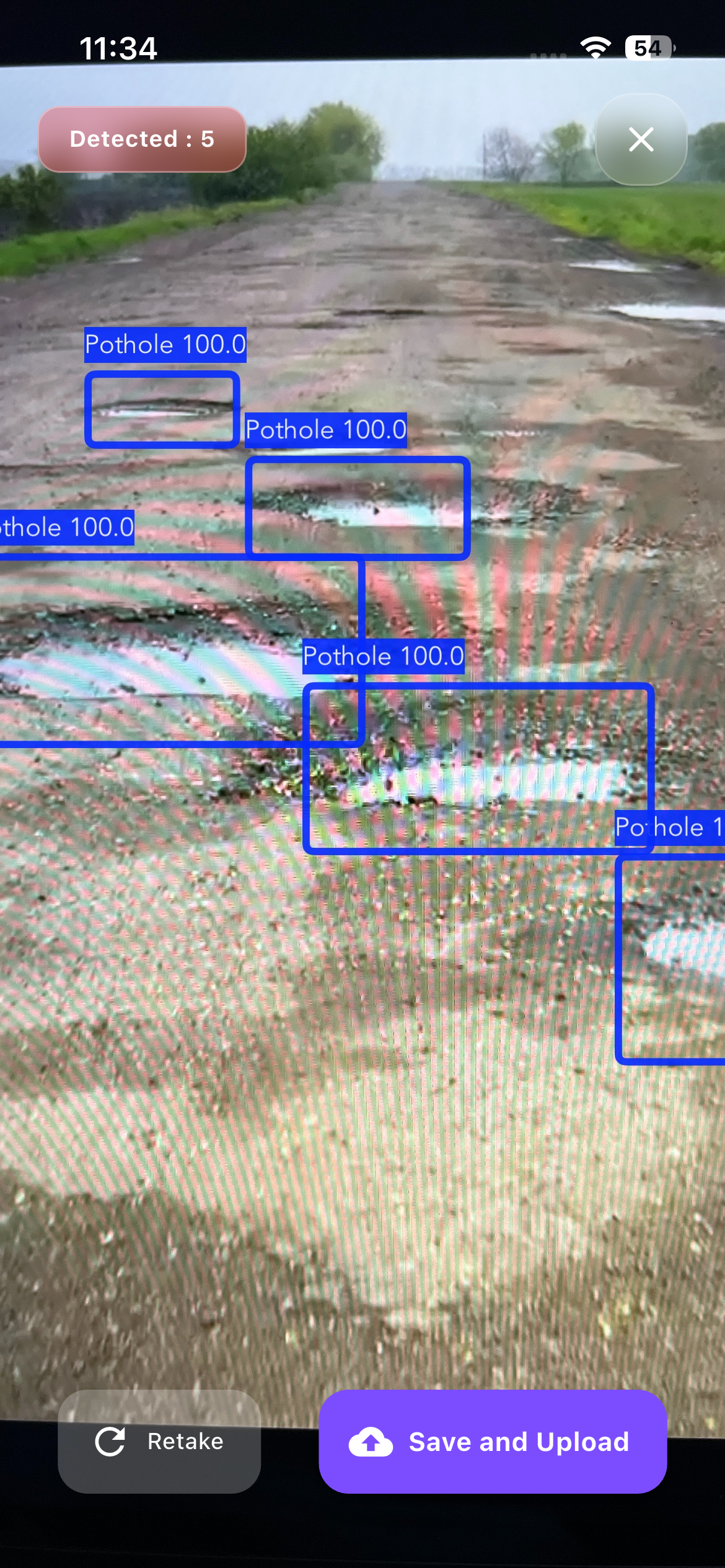
PotholeDetector
A road-hazard reporting platform built around an AI-powered mobile app. Detection runs on-device — including offline — capturing image evidence with GPS, storing records locally, and syncing in batches when connectivity returns. A connected web portal surfaces records on maps and tables, highlighting traffic risk zones, accident-prone stretches and damaged roads — so government teams plan repairs sooner, and the public can report hazards early.
Core System Parts
Frontend Mobile App
Flutter: camera capture, on-device inference, local storage, deduplication, bulk sync.
Backend API Service
Go + Gin: receives uploads, validates data, persists metadata & media.
Web Portal Operations Dashboard
Next.js dashboard with map & table workflows for reviewing pothole records.
Model Pipeline Training & Export
YOLO training and export workflows for Android & iOS via TFLite / CoreML.
Technology Snapshot
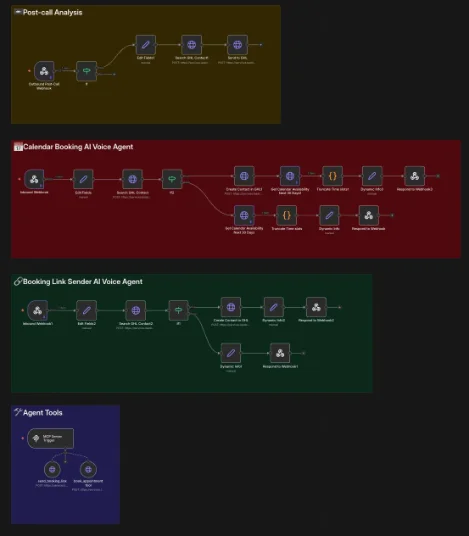
Concierge AI
A fully integrated chat & voice agent that captures every lead, around the clock.
End-to-end client interaction across chat and voice. On chat, Concierge takes over conversations
from Instagram and other channels — answering contextually, sharing booking links and pushing
structured leads into the CRM.
On voice, calls route to the client first — if missed, the client is emailed instantly and an AI
voice assistant picks up, understands the business, books appointments, and delivers a full call
summary afterwards.
Core System Parts
CRM Core (GoHighLevel)
Central CRM & workflow engine — leads, pipelines, automation triggers.
Orchestration (n8n Workflows)
Custom logic beyond native CRM — wiring services together, routing, fallbacks.
Voice (Retell AI Agent)
Real-time, human-like voice assistant — context-aware, action-driven.
Intelligence (LLM + Tool Calling)
OpenAI-grade reasoning with calendar, CRM & API tool calls for booking & lead capture.
Replicable Onboarding (Weeks → Days)
Business context, APIs, channels
Chat, voice, CRM, booking pipelines
24/7 auto sales & support · zero missed leads

Kailasa App
An AI life-coaching platform that calls users back — with memory, persona and
intent.
Kailasa blends conversational AI, proactive voice outreach and intelligent goal tracking through
three domain-specialized personas — Dhani (health), Kubera
(finance) and Fu Shen (relationships).
The system initiates real phone calls in a natural voice, maintains long-term context through
vector memory, and orchestrates sub-second real-time conversations — with a latency target under
1.5 seconds end-to-end.
Core System Parts
Real-Time Voice Pipeline
Pipecat coordinates WebRTC transport, VAD & instant interruption for fluid two-way speech.
Persona LLM Layer
OpenAI with per-persona system prompts & function calling for goals, memory & scheduling.
Long-Term Vector Store
FAISS holds goals, summaries, preferences & past states — recalled by similarity per turn.
Outbound Call Engine
EventBridge + SQS + Lambda dispatch calls reliably with retries & back-off.
Technology Snapshot
What other AI-for-SDLC players rarely combine
We optimize for accountable output — not just output.
| Typical AI-for-SDLC Pattern | NovusVista Governed Model |
|---|---|
| Developer uses AI individually (Cursor, Copilot). | The whole team follows a common AI delivery workflow. |
| Prompts are temporary chats. | Prompts are reviewable delivery artifacts (SPDD). |
| One generic chat agent does everything. | Specialist agents in a real org hierarchy with manager / worker / reviewer separation. |
| "Done" is whatever the agent says is done. | "Done" requires evidence, drift checks, code review, QA, and human closure. |
| Reviews start after code is generated. | Review starts at requirement, plan, and prompt level. |
| Knowledge stays with individuals. | Knowledge compounds across the organization through curated assets. |
| Loose multi-agent demos · autonomy theater. | Trustworthy delivery with human approval where it matters. |
Let's Build Governed, High-Performance AI Together
Tell us about your AI initiative, the problem you're solving, and the constraints you're under. We'll respond within one business day with a tailored delivery roadmap.
Contact Us